
Hello!
I am Dr. Bo-hwang Jung, Head Director of Cleor Clinic Gangnam Branch.
"Doctor, I look fine in the mirror, but I look different in photos.
"My cheeks look saggy, and my jawline isn't what it used to be."
"It makes me a little sad that I have to pull my chin back when taking selfies."
"People say my face looks bigger and tired even though I haven't gained weight."
I hear this very often in the consultation room.
When skin elasticity decreases, it's only natural to feel this way!
That's probably why you've been looking into lifting treatments.
Many people say that when they search online, there are too many types, the reviews are all over the place, and they don't know what to believe.
Today, ONDA LiftingI will explain it just as I do during consultations.
"What is ONDA Lifting?"
It is a procedure that delivers heat into the skin to boost elasticity.
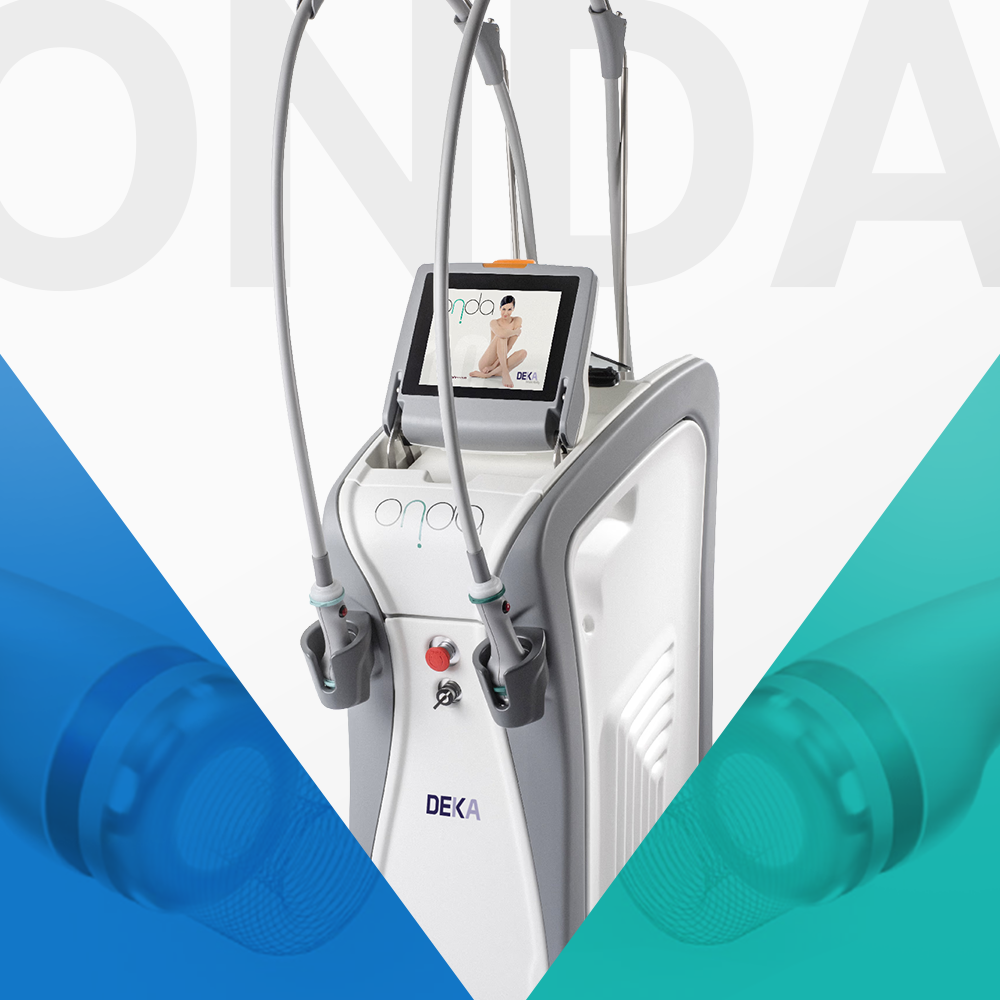
'ONDA' is the name of a device made by an Italian company, and it is
"a radiofrequency lifting treatment that delivers heat deep into the skin to 'refine' elasticity" .
What does it mean to deliver heat?
When heat enters the inside of the skin, our body reacts by thinking, "There's stimulation here, I need to repair it,"
In this process, skin-firming collagen is newly produced,
as the sagging tissue tightens, elasticity is restored.
You know how your skin feels temporarily firmer when you go to a sauna?
The principle isn't exactly the same, but you can understand it similarly in that heat stimulates the skin.
However, ONDA lifting 'pinpoints' and delivers heat to the exact depth in the skin, which is what makes it different.
How is it different from other lifting procedures?
With so many lifting procedures out there, it can be confusing, so let me explain by dividing them into 3 main types.
Thread lifting is a method that physically pulls up the skin by inserting threads into it,
much like gathering fabric with stitches on clothes. You can see the effect right away, but the procedure is a bit more invasive and comes with downtime.Ultrasound lifting (=Ulthera) delivers heat to a very deep layer of the skin using ultrasound.
It reaches the membrane above the muscle called the fascia, so it's also used for those with quite advanced sagging, though it can be painful.Radiofrequency lifting (including ONDA lifting) tightens the skin and fat layers using radiofrequency heat.
It targets a slightly shallower layer than ultrasound, but it is less painful and excels at contouring areas with fat, such as the cheeks or jawline.
To put it simply, ONDA lifting is for those who think,
"Inserting threads feels burdensome and I don't want anything too painful, but I'm bothered by my cheeks or jawline becoming a bit loose."
This is a procedure worth considering for those who want this.
Are there any unique features of Gangnam Station ONDA lifting?
With ONDA, heat reacts well with fat cells, as it is designed to do.
So, while improving skin elasticity, you can also target cheek fat or submental fat
and expect a certain degree of contouring effect.
Simply put, it has the advantage of targeting both "elasticity + line contouring" at the same time.
However, it does not drastically remove fat like liposuction;
rather, it is closer to refining the contours as the loosened fat layer becomes more compact.
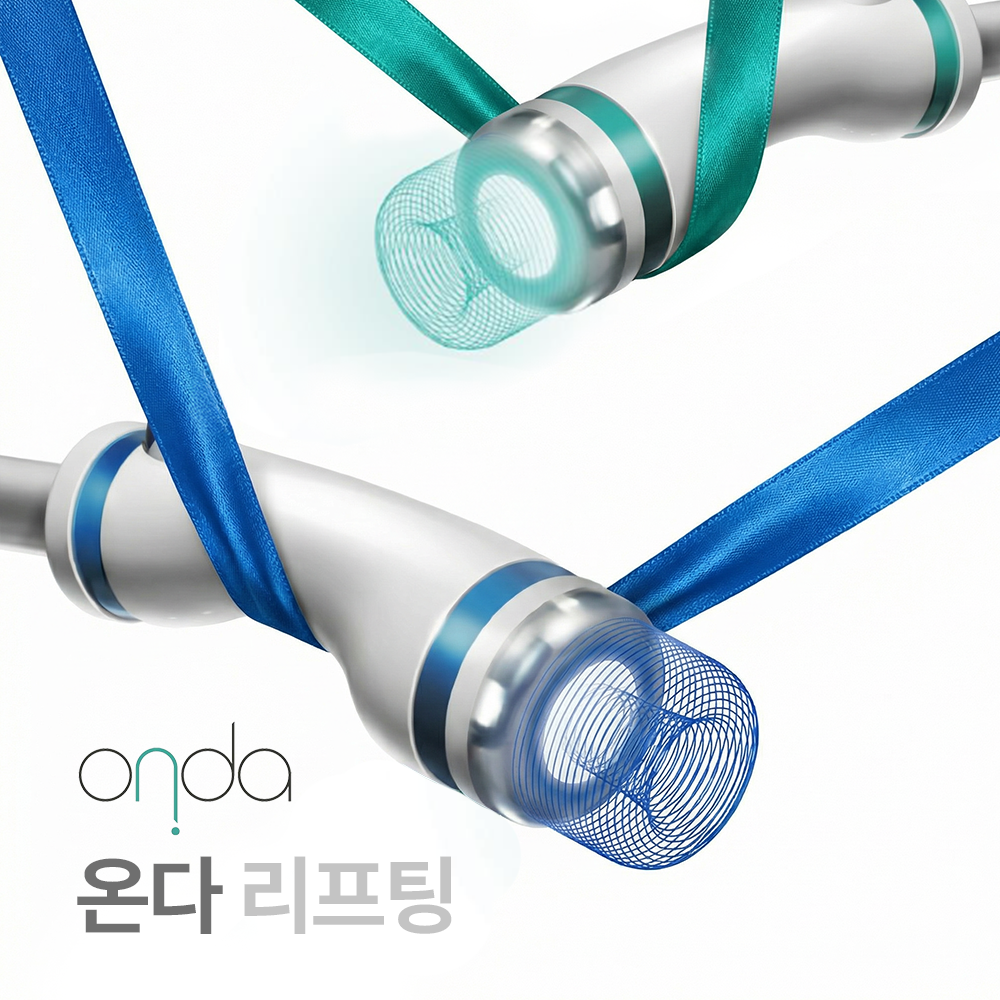
ONDA lifting uses different handpieces depending on the area.
Shallow targets the dermal layer, meaning close to the skin's surface,
and is mainly used on thin-skinned areas like the forehead or around the eyes when the goal is to improve fine lines or skin texture.
Deep delivers heat to the deeper subcutaneous fat layer,
and is used when the goal is to contour areas with a fat layer, such as the cheeks or jawline.
When treating the face, these two are combined depending on the area.
For example, it is designed using Deep for the cheeks and Shallow for the eye area.
You will not see an immediate change right after the procedure.
When radiofrequency heat is delivered, collagen remodeling begins, which does not happen immediately.
Usually, after 2–3 weeks, you may start noticing smoother skin texture and improved elasticity, and
between 4–8 weeks, the changes often become more noticeable.
Therefore, if you say, "I want a dramatic change before an important appointment next week," ONDA lifting is not suitable, and
it is a better fit for those who say, "It's not urgent, I just want natural improvement."
Is one session enough?
While one session may be enough for some, for most people, 3–5 sessions at 4–6 week intervals are
recommended as repeated treatments, because collagen remodeling is not completed with a single stimulation;
repeated thermal stimulation is needed for collagen production to accumulate and for the effects to build up.
Afterward, some people also get touch-ups every 6 months to 1 year for maintenance.
When ONDA lifting is a good fit
Those whose face has become loose, but not severely sagging
Those who are concerned about fullness in the cheeks or a blunted jawline
Those who find thread lifting burdensome and want natural improvement
When another treatment is a better fit than ONDA lifting
Those with significant sagging who need definite lifting
Those who want immediate and dramatic changes
Those with very thin skin and little subcutaneous fat
Frequently Asked Questions (FAQ)
Q. Is ONDA lifting very painful?
It is difficult to say that it is completely painless.
However, it is not a "stabbing pain," but rather a repeated hot and tingling sensation.
Areas close to the bone, such as the jawline or under the cheekbones, may feel a bit more sensitive.
If you are worried about pain, we can allow sufficient time for the numbing cream to take effect or adjust the energy intensity during the procedure.
Q. Will there be swelling or bruising?
On the day of the procedure, your face may feel flushed or slightly swollen,
and most of this subsides within a day or two.
Bruising is not common, but it can rarely occur in those with sensitive skin or visible blood vessels.
Q. How long does the procedure take?
For a full face, the procedure itself takes about 20–40 minutes,
and including numbing time, you should expect about 60–90 minutes in total.
Q. Can I get it together with fillers or Botox?
It is often possible, though the order and interval are important.
Getting a radiofrequency procedure immediately after fillers can cause the filler to spread or look unnatural,
so it is safer to determine the order based on your overall treatment plan.
Q. Are there any post-treatment precautions?
Please avoid saunas, steam rooms, strenuous exercise, and alcohol on the day of the treatment.
It is also best to take a break from scrubs or strong retinol products for a few days.
Moisturizing and sun protection are essential! If pain progressively worsens,
blisters or oozing occur, or swelling is noticeably worse on one side, please contact us immediately.
Gangnam Station ONDA lifting uses radiofrequency heat to improve skin elasticity and
is a procedure that refines cheek fat and the jawline.
Rather than providing immediate changes, it gradually and naturally improves the skin through collagen remodeling,
with minimal pain or downtime, making it suitable for maintaining your routine alongside daily life.
However, it is not a suitable procedure for everyone.
Depending on your skin condition and goals, whether ONDA is right for you or if another approach is more effective may vary.
It is not too late to decide after thoroughly checking during your consultation.