
Hello.
I am Dr. Hwang Bo-jeong, Director of Cleor Clinic Gangnam.
Instead of becoming smooth a few days after shaving,
have you ever noticed red, bump-like breakouts appearing instead?
"I definitely shaved, but I can see hair under the skin,
and it stings when I scratch it, even leaving marks."
Many people come to us with these concerns.
This is not just a simple skin trouble,
but potentially a condition known as ingrown hair.
It occurs when hair fails to grow straight out of the skin,
curling back inward or growing sideways,
causing inflammation and small bumps around the pores.
Repeated shaving or waxing,
thick accumulation of dead skin cells, and dry skin
make it harder for hair to find its way out, increasing the likelihood of ingrown hairs.
Since surface-level treatments often lead to frequent recurrence,
Apogee Laser Hair Removal, which targets the hair follicles themselves, is recommended as a fundamental solution.
Today, we will discuss why ingrown hairs occur in Gangnam,
and how Apogee Laser Hair Removal works to address this issue.
Let's take a closer look.
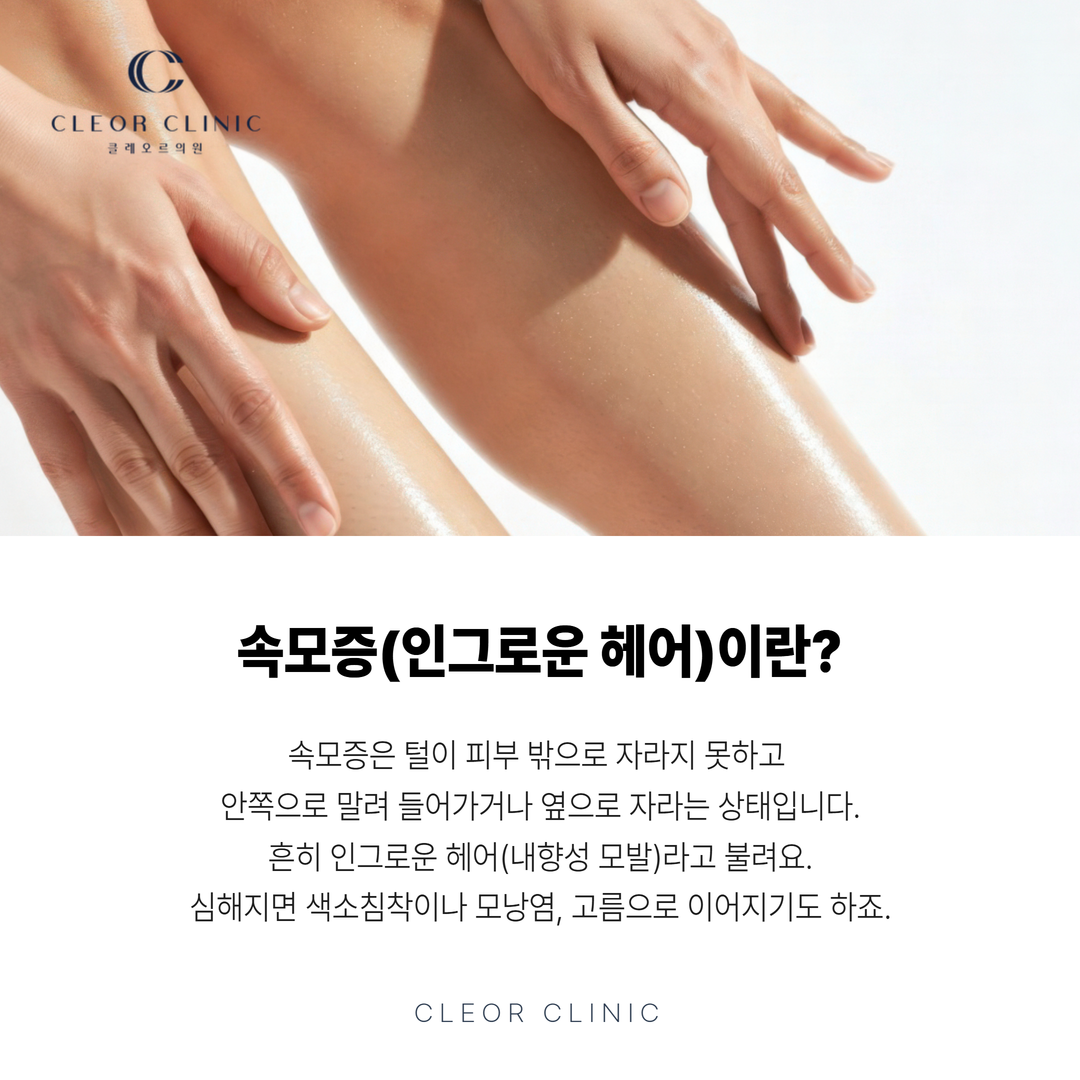
What is Gangnam Ingrown Hair?
👉 Ingrown hair is a condition where hair cannot grow out of the skin,
instead curling inward or growing sideways.
It is commonly referred to as ingrown hair.
Outwardly, it appears as small red bumps or protrusions,
and if inflammation occurs, it becomes redder, itchy, or stinging.
In severe cases, it can lead to hyperpigmentation, folliculitis, or pus formation.
It frequently occurs in areas that are often shaved or waxed,
(such as the chin, upper lip, legs, armpits, and bikini line).
Causes of Gangnam Ingrown Hair
👉 The primary cause of ingrown hair is
the blockage of the hair's path to the skin's surface.
It typically occurs in three main situations.
First, during repeated shaving or waxing.
When the hair tip is cut sharply and regrows,
it may fail to penetrate the skin and instead grow inward.
Second, when there is a thick buildup of dead skin cells.
If dead skin covers the pore opening,
the hair loses its exit path and grows sideways.
Finally, when the skin is dry or pores are clogged.
When sebum, dead skin, or cosmetic residue clogs the pores,
hair can easily become trapped inside the skin.
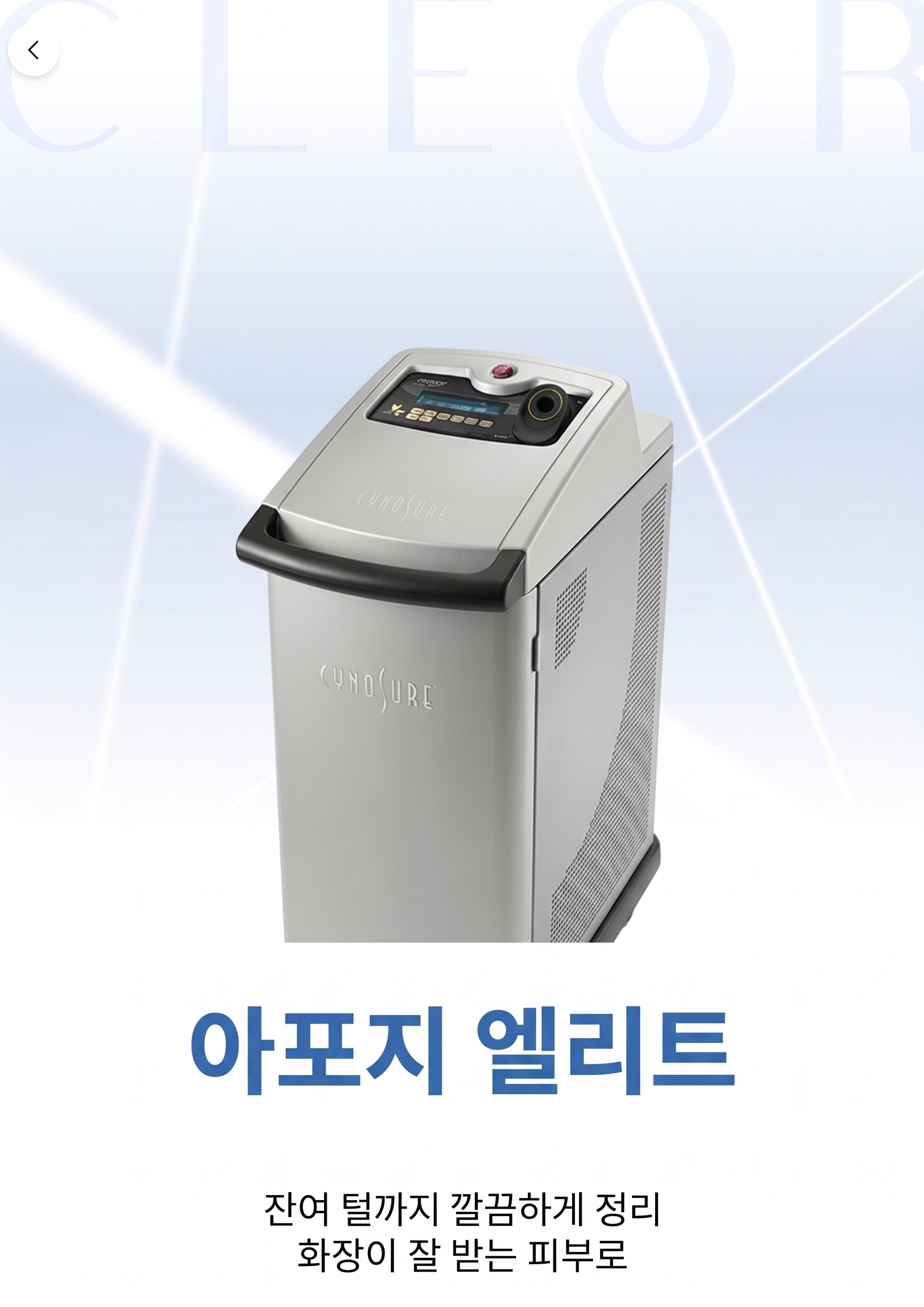
What is Apogee Laser Hair Removal?
👉 Apogee Laser Hair Removal is a US FDA-approved laser that uses a 755nm Alexandrite wavelength
to selectively destroy melanin in hair follicles.
The exact device name is Apogee Elite Plus,
which is a dual-wavelength laser utilizing both 755nm Alexandrite and 1064nm Nd:YAG
wavelengths.
To put it simply, the laser light is absorbed by the melanin pigment in the hair,
converting into heat to treat the hair follicle.
Just as sunlight is absorbed more effectively by black ink,
energy is concentrated on the hair and follicles rich in melanin,
while the surrounding skin tissue receives relatively less irritation.
Ingrown hairs often recur if only the surface hair is removed,
but because Apogee Laser Hair Removal treats the follicle that produces the hair,
it serves as a fundamental care approach for recurring ingrown hairs.
Effects and Advantages of Apogee Laser Hair Removal
👉 The key advantages of Apogee Laser Hair Removal are summarized into three points: hygienic
non-contact method, selective follicle treatment, and reduced pain.
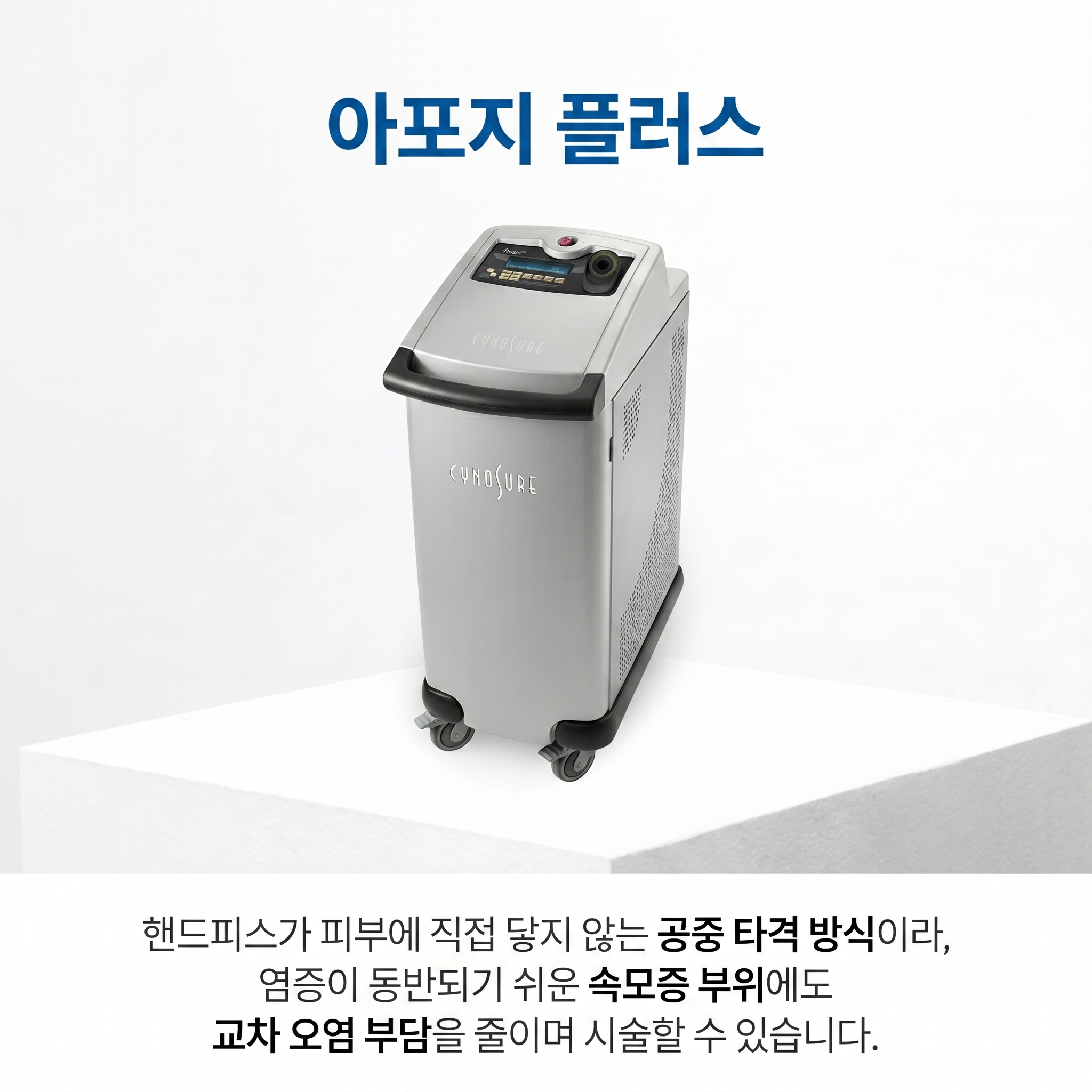
First, it is hygienic due to its non-contact method.
As it uses an aerial delivery system where the handpiece does not touch the skin,
it can be performed on ingrown hair areas prone to inflammation
while reducing the risk of cross-contamination.
Second,it selectively treats melanin in the hair follicles.
The 755nm Alexandrite wavelength has a high melanin absorption rate,
reacting to a wide range of hair from fine vellus hair to thick hair,
while minimizing damage to the surrounding normal skin.
Finally, the built-in cooling system reduces the burden of pain.
By cooling the skin surface the moment the laser is emitted,
heat and stinging sensations are reported to be relatively mild.
Ideal Candidates for Gangnam Ingrown Hair Care
Those who experience recurring red bumps or ingrown hairs after shaving or waxing
Those who frequently suffer from hyperpigmentation or folliculitis due to ingrown hairs
Those whose frequently shaved areas (upper lip, chin, legs, armpits, etc.) have become rough
Those seeking fundamental care because surface-level management leads to recurrence
Those who want a hygienic, non-contact hair removal method
Side Effects and Important Considerations for Apogee Laser Hair Removal
👉 Apogee Laser Hair Removal is not a one-time procedure;
it requires multiple sessions according to the hair growth cycle.
Since the laser only reacts to hair in the growth (anagen) phase,
it is often repeated 5 or more times at intervals of about one month.
The most commonly reported temporary reactions after the procedure
are mild redness and slight swelling for 1–2 days,
which usually subside naturally.
Treated hairs will fall out naturally over the course of 1–2 weeks.
In rare cases, folliculitis, blisters, scabs, or pigment changes may occur,
so we will examine these during the pre-treatment consultation if you experience significant discomfort.
Please inform us in advance as the procedure may be restricted in the following cases:
If you are pregnant or breastfeeding
If you are taking photosensitizing medications
If you have heart disease or a keloid-prone constitution
If there is acute inflammation, wounds, or herpes in the treatment area
If you have recently had intense tanning or UV exposure
⚠️ Pre-treatment Precautions for Apogee Laser Hair Removal
1–2 Weeks Before Treatment
Do not pluck or wax; please only shave the area.
The hair root must remain for the laser to react with the follicle.
Avoid intense tanning or prolonged UV exposure.
2–3 Days Before Treatment
It is best to avoid exfoliation or harsh scrubs.
Performing the procedure on sensitive skin may increase irritation.
Day of Treatment
Please arrive with the treatment area cleanly shaved.
Areas difficult to self-shave will be handled at the clinic.
Any medications you are taking or history of skin conditions
should be disclosed during the consultation to be reflected in the settings.
⚠️ Post-treatment Precautions for Apogee Laser Hair Removal
Day of Treatment
Do not rub or scratch the treated area,
and light washing with lukewarm water is appropriate.
Avoid hot showers or saunas.
3–7 Days After Treatment
We recommend avoiding alcohol, saunas, steam rooms, and strenuous exercise.
Do not forcibly pluck or shave while the treated hairs are falling out.
It is advisable to consistently use sunscreen.
2 Weeks After Treatment
Manage the area only by shaving until the next session,
and avoid waxing or plucking.
If the hair root is removed, the effectiveness of the next session may decrease.
❓ Frequently Asked Questions (FAQ)
Q. Can Gangnam ingrown hair be completely eliminated with Apogee Laser Hair Removal?
Since it treats the hair follicle, the root cause of ingrown hair,
it is reported that cumulative sessions reduce the appearance of ingrown hairs and bumps.
However, as hair growth cycles and skin reactions vary by individual,
the extent of change and the number of sessions required will differ for everyone.
Q. How many sessions of Apogee Laser Hair Removal are needed?
Because the laser only reacts to hair in the growth phase,
it is typically performed 5 or more times at intervals of about one month.
The recommended number of sessions varies depending on the area and hair condition.
Q. How painful is Apogee Laser Hair Removal?
Since the built-in cooling system cools the skin surface during the procedure,
many people describe the sensation as a slight stinging.
However, pain perception varies by area and individual.
Q. Can I have the procedure if my Gangnam ingrown hair is already inflamed?
If there is acute inflammation or pus,
it is safer to proceed after the area has calmed down.
In many cases, hair removal is scheduled after concurrent soothing treatments.
Q. Can I return to daily life immediately after Apogee Laser Hair Removal?
There may be mild redness for 1–2 days after the procedure,
but most people can return to their daily routine without a separate recovery period.
However, it is best to avoid saunas and strenuous exercise on the day of treatment.
If ingrown hairs seem to worsen with repeated shaving,
it may be time to address the issue at the follicle level,
rather than just the surface.
Apogee Laser Hair Removal selectively treats melanin in the follicles,
providing a fundamental care approach for recurring Gangnam ingrown hairs.
The number of sessions and settings appropriate for your specific area and hair condition
will be determined during your consultation.
If you are concerned about bumps or ingrown hairs appearing after shaving,
please feel free to visit Cleor Clinic Gangnam.
Even before deciding on a procedure, we will provide a detailed guide on your skin and hair condition,
as well as the most suitable care direction through a pre-treatment consultation.
※ This content is for general informational purposes, and results may vary by individual.
Please consult with a specialist for an accurate diagnosis and to determine if the procedure is right for you.
▼ Cleor Gangnam Apogee Hair Removal ▼
https://gangnam.cleorclinic.com/ko/treatments/제모%20·%20체형/여성%20제모
▼ Recommended Related Column ▼
https://gangnam.cleorclinic.com/ko/about/posts/0cusGP2PPWui993K4Lam